

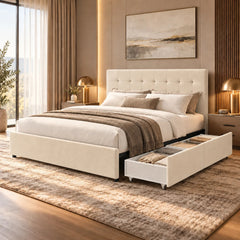
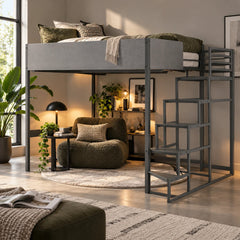
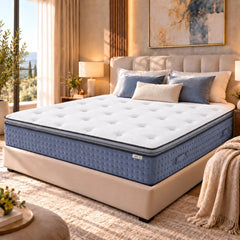
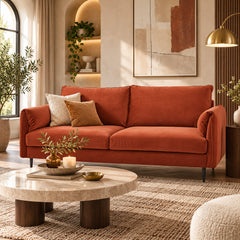




Building a European furniture brand is about more than designing furniture in one country and then selling it in the neighboring countries. To build a brand that can grow sustainably across Europe, you have to think beyond borders from day one. That is precisely the vision behind SENHO's founding, a French company born with a European ambition. Europe is, after all, both an immense market and a fascinating puzzle: different languages, different buying habits, different competitors, different distribution networks, and expectations that are sometimes very local. And yet, beneath this diversity, European households share many common needs.
Europe: Many Markets, but Often Similar Needs
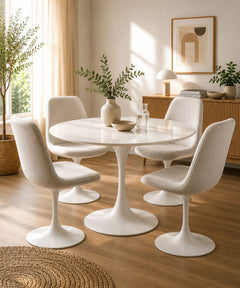
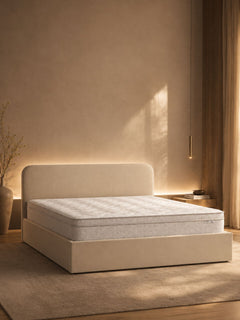
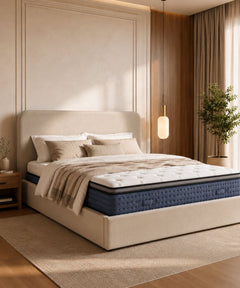
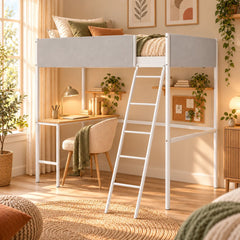
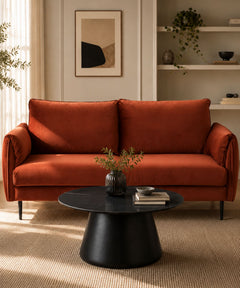
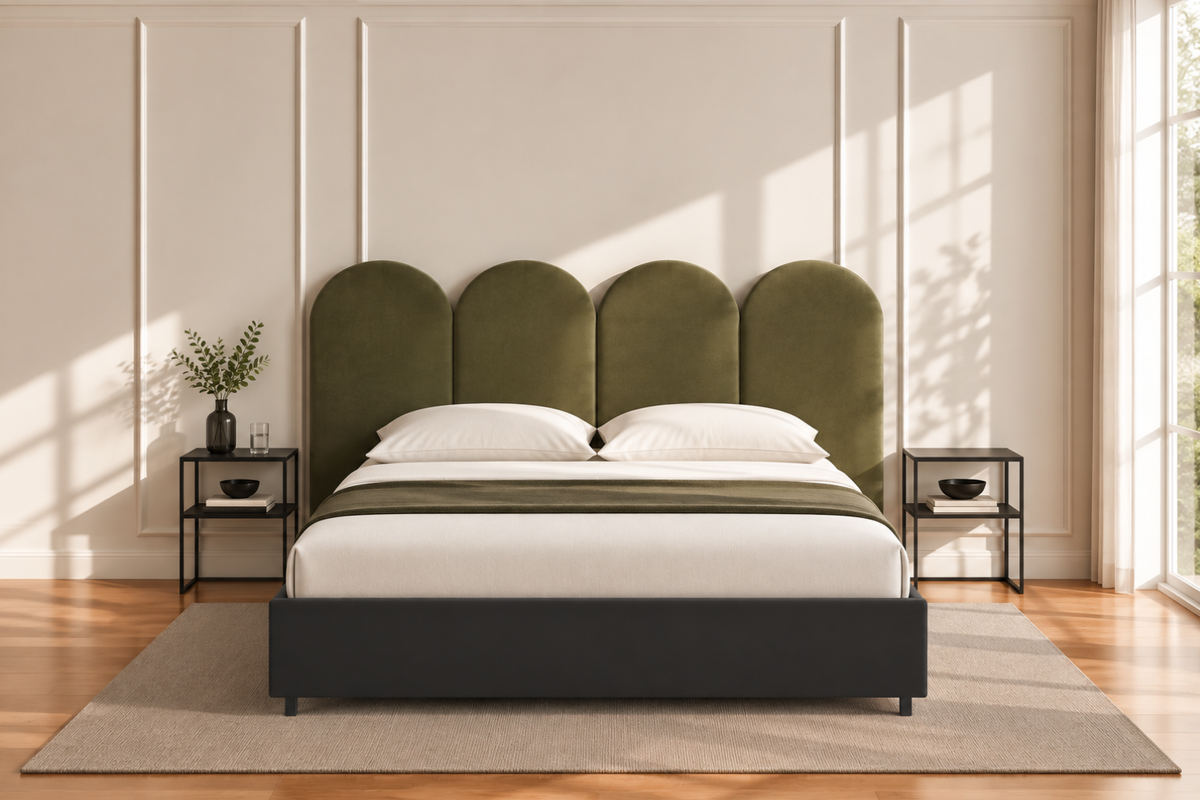
Paris, Madrid, Brussels, Milan, Amsterdam, and Lisbon are not alike. Yet many Europeans today live with the same constraints: homes where space has to be used wisely, a need for practical furniture, and a desire to balance style, comfort, and an affordable price. Furniture is no longer just decorative. A bed can include storage, a loft bed can free up dozens of square feet of floor space, and a sofa has to be comfortable while also fitting the real dimensions of an apartment. A table, for its part, has to be beautiful but also sturdy enough to hold up to everyday life for years. This is the reality SENHO builds its collections around: furniture that is useful, durable, and attractive, designed for the people who actually live with it every day.
A European Furniture Culture Already Exists
Recent history in the furniture industry shows that a piece of furniture can travel far beyond its country of origin. IKEA, in particular, helped create a kind of shared European culture of affordable furniture: recognizable products, collections that cross borders, and a new way of buying and assembling furniture. SENHO operates on a scale that is, of course, incomparable, and it pursues a different identity. Our goal is not to copy a Scandinavian model or to focus exclusively on furniture for first homes. Instead, we aim to develop timeless furniture built around three simple ideas: comfort, usefulness, and real life in European homes. Of course, furniture has to be efficient to manufacture, but its design shouldn't start with industrial or commercial constraints. It should start with a much simpler question: what will this piece actually be used for in the home of the person who buys it?
Designing a European Product Before You Even Sell It
Creating furniture for several countries means thinking about how it will be used from the very beginning, because home sizes, sleeping habits, aesthetic preferences, and even the way certain rooms are used can vary from one market to another. That means looking for what the markets have in common without producing something generic. This is probably one of the main challenges for a European furniture brand: creating a product that is universal enough to find its place in several countries while keeping a recognizable personality. At SENHO, we therefore try to design our collections around the needs shared by consumers in the different European markets we serve. But designing the furniture is ultimately only the beginning of the work.
Selling Furniture in Europe Also Means Building European Logistics
Furniture is an unusual product to sell online. It is often heavy, it can be bulky, it comes in several pieces, it may need to ship in several boxes, and it sometimes has to travel more than 600 miles before it reaches its owner. Developing a European brand therefore also means gradually building a logistics network capable of delivering furniture in several countries. The carrier that suits a small package is not necessarily the one that can deliver a sofa, a bed, or a large table. You have to consider weight, dimensions, the number of boxes, the destination country and address, the capabilities of local carriers, how delivery appointments are scheduled, and the level of service the customer expects. A European brand cannot simply translate its website and consider its international expansion finished: it has to build the entire infrastructure behind the order.
Packaging Becomes Part of the Product
When furniture is sold in a store, its journey through the supply chain stays relatively under control. E-commerce changes that equation completely. A piece of furniture ordered online may pass through a warehouse, several logistics hubs, different trucks, and plenty of handling before it reaches the customer's home. The packaging of furniture sold online therefore becomes almost as important as the product itself: it has to protect corners, surfaces, glass, metal, and wooden components while withstanding the stresses of long-distance transport. Designing for Europe also means designing for European logistics, because a beautiful piece of furniture that arrives damaged isn't a good product.
Seven Languages, One Brand
Another challenge appears as soon as you cross a border: language. To sell our products across Europe, SENHO now produces its content in several European languages. Product descriptions, assembly instructions, safety information, marketing content, and customer service all have to be understood in the country where the furniture is sold. But translation alone is not enough, because the same brand has to come through in every language. A translation that is too literal can give the impression that a site was simply adapted in a hurry, while localization that goes too far can gradually create several different brands. The challenge, then, is to find the right balance: adapting communication to the local market while keeping a consistent SENHO identity across Europe.
Artificial Intelligence Is Changing How European Brands Are Built
For a long time, language was a real commercial barrier, since creating product pages, instructions, marketing campaigns, and customer service in several languages required considerable resources. That barrier is shrinking fast. Artificial intelligence, modern translation tools, and general improvements in language technology now allow much smaller companies to communicate effectively in several languages. That does not mean all cultural differences have disappeared, but the central question is changing. The problem is no longer just: "How do we translate this product page into Spanish, Italian, or Dutch?" The real question becomes: "How do we build a consistent brand that can be understood and appreciated in several European countries?" And this shift opens up new possibilities for companies that, in the past, would probably have been forced to remain essentially domestic.
A European Brand Must Stay Local Without Becoming Different Everywhere
One of Europe's paradoxes is that a brand has to be European and local at the same time. A Spanish consumer should not feel like they're shopping on an automatically translated version of a French site, a Belgian consumer should find delivery options suited to Belgium, and an Italian customer should be able to immediately understand the instructions or safety information. But everyone should recognize the same brand: the same level of quality, the same product philosophy, the same way of communicating, and the same promise. This consistency is probably even more important than the translation itself.
Designing for Several Countries Also Forces You to Design Better
There is another advantage to thinking European from the start. When a product has to meet the expectations of consumers from several markets, it becomes harder to lean solely on a local habit or a passing trend, and easier to get back to the fundamentals. Is it comfortable? Is it practical? Is it durable? Is it easy to assemble? Does it suit the dimensions of homes? Is it timeless enough to stay relevant in different settings? This search for a common denominator can ultimately lead to products that are simpler in purpose and more universal in use.
Building SENHO as a European Brand
SENHO is a French company, but our ambition was never to think only about the French market and consider Europe later. We are gradually expanding our presence in several European countries, aiming to keep a single identity while learning the particulars of each market. This means building several pieces at once: collections designed around needs common to European households, logistics capable of moving furniture over long distances, packaging designed for e-commerce, instructions and information available in several languages, customer service able to communicate with different markets, content optimized for search engines in several countries, and an identity clear enough to stay recognizable everywhere. This work is far less visible than a new sofa or a new bed, but it is probably what gradually turns a national company into a true European furniture brand.
Different Countries. Different Competitors. One Vision.
Europe will remain diverse, and that is precisely what makes it rich. Building a European brand does not mean erasing these differences but learning to build something that can work amid them. Technology is shrinking language barriers, logistics lets products travel, and e-commerce lets a relatively young brand reach consumers in several countries. But at the center of all this, a simple and consistent idea has to remain. For SENHO, that idea is to design beautiful, functional, and durable furniture that is accessible to as many people as possible, made first and foremost for the people who will live with it.
Different countries. Different languages. Different competitors. One vision.

Leave a comment
This site is protected by hCaptcha and the hCaptcha Privacy Policy and Terms of Service apply.